Office Clearances in London
If you are looking for Office Clearances in London, you are likely dealing with a space that needs to be emptied quickly, carefully, and with as little disruption as possible. Whether you are moving out of a serviced office in the City, refurbishing a workspace in Shoreditch, closing a small studio in Camden, or clearing an entire floor in Canary Wharf, the process needs more than just a van and a few willing hands. It takes planning, proper lifting, responsible disposal, and an understanding of how London offices work in real life.
Our local office clearance service is designed for businesses, landlords, managing agents, and tenants who need a fast, organised, and reliable way to clear desks, chairs, filing cabinets, IT equipment, and general office contents. We also support companies who are downsizing, relocating, or carrying out a refurbishment, as well as those who need one-off removals after a lease ends. Every workplace is different, and a good clearance should be flexible enough to suit a small startup in a shared workspace or a larger commercial unit with restricted access and tight timings.
London presents its own challenges: narrow stairwells, loading restrictions, controlled parking, lift bookings, busy roads, and buildings with strict management rules. A local team understands how to work around these issues without creating unnecessary delays. That means less stress for you, a smoother job on the day, and a clearer path to getting the premises ready for handover, cleaning, redecoration, or the next tenant. If you need office clearance in London and want the job handled properly, this service is built around your needs.
What Office Clearances Cover
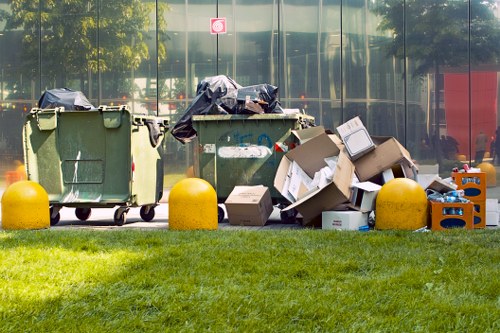
Office clearance is more than simply taking away unwanted furniture. It is a structured service that can involve removing bulk items, dismantling workstations, separating recyclable materials, and ensuring the premises are left in a condition that suits the next stage of use. Many customers come to us because they want a single team to handle the heavy lifting rather than coordinating several different companies.
Typical office clearance work in London may include one room, a full suite, an entire floor, or an entire building. Some customers need a rapid empty-out after a lease expires; others are planning well ahead of a relocation and want the outgoing office cleared gradually. In either case, the aim is the same: to remove the contents efficiently and responsibly while keeping disruption to a minimum.
Common items included in office clearances are desks, chairs, meeting tables, storage units, filing cabinets, screens, printers, monitors, computers, cables, kitchen items, paperwork, display units, reception furniture, and leftover commercial waste. Depending on the brief, we can also assist with light dismantling, loading, and sorting items for reuse, recycling, or disposal.
Types of workplaces we help clear
London has a wide variety of commercial spaces, and office clearance needs can vary significantly from one property to the next. We regularly work in:
- Corporate offices in central business districts
- Small creative studios and shared workspaces
- Retail offices and back-of-house admin areas
- Consultancy suites and professional practices
- Co-working units and serviced offices
- Industrial offices attached to warehouses or trade premises
- Education, charity, and public-sector office spaces
Each setting comes with different access rules and different expectations. A local clearance team should be able to adapt to them rather than working from a one-size-fits-all approach.
Why London Businesses Choose a Local Clearance Team

Choosing a company that understands London can make a real difference. Office buildings in the capital often have limited parking, strict loading bays, time windows for collections, concierge desks, and building managers who expect advance notice. If the team clearing the office is not used to these conditions, the job can become slow, expensive, and frustrating.
Working with a local service helps because the crew is familiar with the practical realities of moving around the city. They are more likely to know how to manage collections in busy districts such as Westminster, Southwark, the City, Canary Wharf, Ealing, Hammersmith, Islington, and South Kensington. That local experience can save time and reduce the chance of avoidable setbacks.
Local knowledge also matters for sustainability and disposal. Clients increasingly want to know that office furniture and equipment are being handled properly. A reputable clearance service will separate reusable items, identify recyclable materials, and ensure waste is processed through appropriate channels. That is good for your business, good for the building, and better for London overall.
Benefits of using an office clearance service in London
- Less disruption to staff and neighbouring tenants
- Experienced handling of bulky or awkward office furniture
- Support with buildings that have access restrictions
- More efficient planning around parking and time slots
- Responsible disposal of office waste and surplus equipment
- A single point of contact for the clearance itself
If you are comparing options, look for a team that is clear about what is included, how access is managed, and how the clearance will be completed within your building requirements.
What Is Included in an Office Clearance

Every office clearance is different, but a strong service should be able to cover the main items that accumulate in a workplace over time. This often includes furniture, storage, electronics, archive material, and mixed office contents. The exact scope can be tailored to the size of the office and the level of clearance required.
For many London customers, the service starts with a review of the rooms or floors that need clearing. From there, the team can plan how to remove the items safely, how many people are required, and whether any furniture needs dismantling before it is taken out. This is especially useful in buildings where doorways, staircases, or lifts create tight access points.
The goal is to leave the office space in a presentable and usable state, ready for whatever comes next. That might be a final clean, a dilapidation check, a fit-out team, or a new occupant. A well-managed clearance reduces the chance of hold-ups at the end of a tenancy or project.
Typical items removed during an office clearance
- Office desks and benching systems
- Task chairs, visitor seating, and boardroom chairs
- Filing cabinets, shelves, and lockable storage
- Meeting room tables and breakout furniture
- Reception furniture and waiting area items
- Computers, monitors, printers, and peripherals
- Cables, small IT equipment, and accessories
- Kitchen appliances and canteen furniture
- Paper archives and unwanted office materials
- General business waste left behind after relocation
Important: if you have confidential materials, sensitive documents, or equipment containing company data, ask in advance how these items will be handled. Many businesses want extra reassurance that anything sensitive is separated appropriately and removed with care.
How the Office Clearance Process Works

The process should feel straightforward from the first enquiry to the last item leaving the property. For many customers, the biggest concern is timing. A good local service will keep things organised so your team can stay focused on the move, closure, or refurbishment rather than managing boxes, furniture, and waste.
In most cases, the job begins with a discussion about the size of the office, the type of items that need removing, and any building restrictions. In London, this step is especially important because access arrangements can shape the whole plan. Loading bays, lifts, and timing windows often need to be confirmed before the work begins.
On the day, the team will arrive ready to remove the agreed items, separate what can be reused or recycled, and clear the space as efficiently as possible. If dismantling is needed, that is usually done first so larger pieces can be moved safely through corridors, stairwells, and entrances without damage to the property.
Step-by-step service structure
- Initial enquiry – you describe the office, items, and desired dates.
- Job planning – access, parking, and building rules are reviewed.
- Clearance day – the team removes the agreed contents.
- Sorting – items are separated for disposal, recycling, or reuse where appropriate.
- Final sweep – the area is left ready for the next stage.
For customers under time pressure, this clear structure is often the difference between a smooth handover and a stressful last-minute rush. When the office has to be emptied by a deadline, an organised team matters.
London Property Types and Access Challenges

One of the main reasons office clearances in London need specialist attention is the mix of property types. The city contains modern tower blocks, converted warehouses, older period buildings, basement offices, mews properties, shared business centres, and tall developments with concierge-controlled access. What works in one building may not work at all in another.
Older buildings can have narrow staircases, no lifts, or awkward internal layouts. Contemporary offices may have strict booking systems for loading docks and service lifts. Some premises only allow removals during specific hours, while others require floor protection or prior approval for equipment movement. These details can affect the time needed and the way the job is carried out.
Parking is another common issue. In parts of central and inner London, finding a safe and legal place for a vehicle can be difficult. A local team should factor in controlled parking zones, loading restrictions, congestion, and building access rules before the clearance begins. That reduces the chance of delays and helps the day run to plan.
Areas where these challenges are especially common
- The City of London and surrounding commercial districts
- West End offices with limited roadside space
- Canary Wharf and Docklands buildings with managed access
- Converted office spaces in Shoreditch, Hackney, and Clerkenwell
- Mixed-use buildings in Kensington, Westminster, and Southwark
- Suburban business estates in North, South, East, and West London
Planning around the building is just as important as lifting the furniture. That is why a local, experienced team is often the most practical choice.
Office Clearance for Different Customer Types
Office clearances in London are not only for large corporations. In fact, many jobs come from smaller organisations that need a practical and cost-effective way to clear a modest amount of equipment. Whether you are a tenant leaving a leased office or a landlord preparing a space for new occupants, the service can be adapted to suit your situation.
Commercial customers often need clearances linked to relocations, refurbishments, downsizing, or end-of-lease obligations. The work may need to happen outside office hours or in stages so the business can continue trading until the final day. A flexible clearance provider should be able to work around those pressures.
Residential and mixed-use customers may also need office clearances for home offices, studio rooms, or workspaces in converted properties. These jobs can involve smaller volumes, but they still require care, especially if large furniture needs to come through shared entrances or communal hallways. A tidy and respectful approach is essential in these settings.
Common scenarios we help with
- Office relocation and emptying the old premises
- End-of-tenancy clearance before landlord inspection
- Refurbishment or fit-out preparation
- Downsizing to a smaller office footprint
- Clearing excess furniture and outdated equipment
- Removing abandoned items after a business move
- Preparing workspace for sale, lease, or reassignment
If your office situation is unusual, it is still worth asking. Many clearance jobs in London are tailored to unusual layouts, shared buildings, or tight deadlines.
How to Prepare for an Office Clearance
Good preparation can save time on the day and help the clearance run more smoothly. Even if the service team is doing the heavy lifting, there are practical things you can do beforehand to make the job easier. This is especially helpful in London offices where access windows may be limited.
Start by identifying what should stay and what should go. If the office contains items that will be reused in another location, make sure these are clearly marked. Separate any documents, personal belongings, or valuable equipment that are not part of the clearance. If there are sensitive files or devices, decide in advance how they should be handled.
It is also sensible to notify building management, security, or reception teams where required. In many London properties, the clearance team will need sign-in instructions, lift permissions, loading arrangements, or floor protection details. The more these are organised before arrival, the smoother the day is likely to be.
Preparation checklist
- Confirm the items you want removed
- Set aside anything that must remain on site
- Remove personal belongings and confidential documents
- Tell building management about the clearance date
- Check access times, lift rules, and loading bay arrangements
- Reserve any parking or permit requirements if needed
- Let staff know which areas should be left untouched
Simple preparation helps avoid confusion. It also reduces the chance of accidental removal of items that should stay in the property.
Pricing Factors to Consider
Customers often want to know what affects the cost of an office clearance in London. While exact prices depend on the specific job, there are several common factors that influence the quotation. Being aware of these helps you compare services fairly and understand what you are paying for.
The size of the office is a major factor, as larger spaces usually mean more labour, more vehicle capacity, and more time on site. The number and type of items also matter. A room full of lightweight chairs and packing waste will take a different amount of work from an office with heavy filing cabinets, large desks, and built-in furniture that requires dismantling.
Access conditions can also affect the job. If there is no lift, if parking is difficult, or if the team has to work within strict time slots, those factors may influence the overall planning. The distance to disposal points, the amount of recyclable material, and any specialist handling requirements can also play a part.
Factors that may affect your quote
- Size of the office or number of floors
- Quantity and weight of items to be removed
- Need for dismantling or extra labour
- Parking, access, and building restrictions
- Timing requirements, including out-of-hours work
- Level of sorting required for reuse and recycling
- Presence of confidential or sensitive materials
A clear conversation at the start usually leads to a more accurate and useful quote. It is always better to describe the office honestly than to leave out awkward details that may affect the day.
Why Responsible Disposal Matters
When offices are cleared, not everything needs to end up as waste. Many items can be reused, recycled, or repurposed depending on their condition. London businesses increasingly want a clearance service that handles items responsibly, especially when disposing of office furniture and old equipment in large quantities.
Responsible disposal is about more than convenience. It helps reduce unnecessary waste, supports better resource use, and gives customers confidence that their office clearance has been handled with care. For businesses with environmental policies or landlords preparing properties for sale or re-letting, this can be an important part of the brief.
Items such as desks, seating, metal frames, cardboard, and certain electrical items may be separated for recycling where suitable facilities exist. The key is to work with a team that understands how to sort the load properly and send materials through the correct channels rather than treating everything as mixed rubbish.
What responsible handling can include
- Separating reusable office furniture from waste
- Sorting recyclable materials where possible
- Keeping general waste and specialist items apart
- Handling electronic items with care
- Reducing unnecessary landfill use
This is one of the main reasons many customers choose a professional office clearance service instead of attempting to manage the job themselves.
When You Might Need an Urgent Clearance
Sometimes there is plenty of time to plan, but often the need for office clearance in London is urgent. A lease may be ending sooner than expected, a move may have been brought forward, or a refurbishment team may need the space emptied immediately. In these situations, the ability to act quickly is valuable.
Urgent office clearances may also be needed after staff reductions, office consolidation, or the closure of a branch office. The key is to be direct about your timeframe and the amount of work involved. A local company can then assess how best to fit the job into its schedule and what resources are needed to complete it efficiently.
Even when the deadline is tight, it is still worth making sure the clearance is handled properly. Fast does not have to mean careless. A sensible approach focuses on safe lifting, organised removal, and a tidy finish that leaves the premises ready for inspection or follow-on works.
Why speed matters in some office clearances
- End-of-lease deadlines
- Last-minute relocation changes
- Building refurbishment timetables
- Handover to landlords or managing agents
- Business closures or office consolidation
If time is short, contact us today to discuss the space, the access, and the deadline. The sooner the details are shared, the easier it is to plan the clearance properly.
Areas Covered Across London
Office clearances are needed across the capital, from central commercial districts to outer business parks and mixed-use neighbourhoods. Customers often ask whether local teams cover both inner and outer London, and the answer is usually yes, provided the job details and access arrangements are clear.
Typical areas where office clearance work is requested include the City, Westminster, Southwark, Lambeth, Camden, Islington, Tower Hamlets, Hackney, Hammersmith and Fulham, Kensington and Chelsea, Wandsworth, Greenwich, Lewisham, Brent, Ealing, Richmond, Croydon, Harrow, Barnet, Newham, and many surrounding districts. Business locations along major transport routes and office corridors are also regularly served.
Because London is so varied, the way a clearance is carried out may differ from one area to another. Central offices may need tighter timing and more careful parking planning, while suburban locations might offer easier vehicle access but larger quantities of furniture. A service with broad local experience should be able to adapt.
Useful for offices in
- Central London business premises
- Converted warehouse offices in East London
- Modern commercial towers in Docklands
- Professional suites in West and South West London
- Shared workspaces and studios across the city
FAQs About Office Clearances in London
How long does an office clearance take?
The time needed depends on the size of the office, the amount of furniture, access conditions, and whether dismantling is required. A small workspace may be completed relatively quickly, while a larger multi-room or multi-floor clearance can take longer. The best way to estimate time is to describe the office clearly at the enquiry stage.
Can you clear offices in buildings with limited access?
Yes, many London offices have restricted access, and that is very common. Narrow stairs, small lifts, loading restrictions, and concierge-controlled entrances are all part of the job in the capital. A local team should be able to plan around these issues and advise what information is needed in advance.
Do I need to remove everything from drawers and cabinets first?
It is usually better to empty personal belongings, confidential papers, and anything you want to keep before the clearance begins. If you are unsure about specific items, ask in advance so the team can advise you on the best approach.
Can office furniture be dismantled if it will not fit through the door?
In many cases, yes. Dismantling may be necessary for large desks, meeting tables, or modular furniture systems. This is especially common in older London buildings with tight corridors or small lifts.
What happens to the items after removal?
Items are usually sorted for reuse, recycling, or disposal depending on their condition and type. The aim is to handle the load responsibly and avoid unnecessary waste where practical.
Is office clearance suitable for small businesses?
Absolutely. Small businesses, startups, freelancers, and shared office tenants often need clearance support just as much as larger companies. Even a compact office can contain heavy furniture or awkward items that are easier and safer to remove with help.
Book Your Office Clearance in London
If your office needs clearing, the most useful next step is to share the details and get a tailored quote. Office Clearances in London are rarely straightforward enough to estimate accurately without knowing the property type, access setup, and the volume of items involved. A clear conversation helps the service match your timings and requirements more effectively.
Whether you are clearing a full corporate floor, a small studio, a leased office at the end of a contract, or a workspace that simply needs decluttering before a move, a local team can help make the process feel manageable. The service should be organised, respectful of the building, and focused on getting the job done without avoidable hassle.
Contact us today to discuss your office clearance needs, request a free quote, or book your service now. If you are ready to move forward, share the office size, the items involved, the access details, and your preferred timing so the clearance can be planned properly from the outset.
For businesses and landlords across London, a well-run office clearance is often the quickest way to prepare a premises for its next stage.