Business Waste Removal in London
Keeping a workplace clean, compliant, and easy to manage is not just about appearances. For many businesses, waste builds up quickly and starts affecting productivity, safety, customer experience, and the amount of space available for day-to-day work. Business Waste Removal in London is designed to help companies deal with rubbish efficiently, whether you run a small office, a retail unit, a restaurant, a workshop, or a larger commercial premises.
London brings its own challenges: tight streets, controlled parking zones, busy loading bays, mixed-use buildings, and properties that range from modern office developments to older terraces and converted premises. That is why a local, experienced waste removal service matters. You need a team that understands access issues, can work around building rules, and can remove waste without disrupting staff, customers, or neighbours.
From one-off clearances to regular commercial waste collection support, the right service makes it easier to keep your premises tidy and your operations running smoothly. If your business needs a flexible, practical solution, request a free quote and arrange a collection that fits your schedule.
Why Business Waste Removal Matters for London Companies
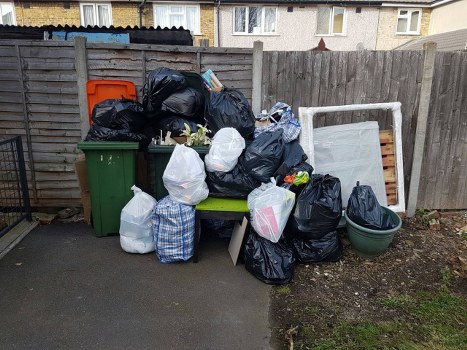
Every business produces waste, but not every business produces it in the same way. An office may generate cardboard, confidential paper, packaging, old IT equipment, and general rubbish. A café or restaurant might deal with food waste, broken furniture, back-of-house clutter, and delivery packaging. A shop may need help clearing out display fixtures, stockroom waste, or materials left over after a refit. In a city like London, where space is at a premium, this waste can build up fast.
Ignoring waste for too long creates practical problems. Corridors get blocked, storage rooms fill up, fire exits become harder to keep clear, and staff can waste time moving piles of rubbish around instead of focusing on customers or core work. In shared buildings, unmanaged rubbish can also cause friction with landlords, other tenants, and building managers. Choosing a professional business rubbish removal service helps avoid those issues before they become more serious.
There is also the question of reputation. Customers visiting a premises in Central London, East London, North London, South London, or West London will notice clutter, overflowing bins, and poor housekeeping. Even a well-run business can look disorganised if waste is left sitting too long. A timely collection helps maintain a clean, professional environment and supports better day-to-day operations.
Who Uses Commercial Waste Collection Services?
Business waste removal is useful for a wide range of local customers. It is not limited to large offices or industrial sites. In London, many different types of premises need help at different times of the year, during refurbishments, when moving out, or simply as part of routine operations.
Typical customers include:
- Offices needing removal of desks, chairs, filing cabinets, monitors, packaging, and paper waste.
- Retail stores clearing stockroom rubbish, shelving, display units, and packaging from deliveries.
- Hospitality businesses managing kitchen waste, furniture, damaged equipment, and clearance after refurbishments.
- Building and trade sites dealing with non-hazardous construction debris, packaging, and site clutter.
- Warehouses and storage units that need regular space-clearing to keep stock areas usable.
- Landlords and managing agents arranging clearance between tenants or after commercial void periods.
- Educational and community premises dealing with furniture, old fixtures, and accumulated rubbish.
Whether your business needs a single uplift or ongoing support, local commercial waste removal can be adapted to your workflow. A good service should be practical, responsive, and suitable for the kind of premises you operate from.
What Is Included in Business Waste Removal?

Business waste removal can cover many kinds of non-hazardous commercial rubbish. The exact service depends on what you need clearing and how much there is, but most collections are designed to be straightforward and hands-off for the customer. You show the waste, agree the scope, and the team removes it from your premises with minimal disruption.
Common items removed from businesses across London include:
- Office furniture such as desks, chairs, cabinets, and meeting tables
- Cardboard, packaging, shrink wrap, and pallet waste
- Paper records and general office clutter
- Old electronics, screens, printers, and computer equipment
- Shop fittings, shelving, rails, and display stands
- Kitchen equipment, back-of-house items, and hospitality fixtures
- Storage room contents and surplus stock
- Light commercial renovation waste, where appropriate
Important: some items may require special handling or separate arrangements, especially if they are hazardous, confidential, or subject to specific disposal rules. A reliable local team will explain what can be taken, what needs to be separated, and how to prepare items for collection. That transparency saves time and avoids last-minute confusion on the day.
How the Service Works
The process should be simple and efficient from the first enquiry through to completion. Businesses often need collections arranged quickly, especially when they are preparing for an inspection, opening a new site, moving out of a lease, or trying to reclaim space in a busy workplace. A good service is built to make that process easier rather than adding more admin.
In most cases, the service works like this:
- Initial enquiry: You describe the type of waste, quantity, access conditions, and preferred timing.
- Quote or estimate: The team assesses the job based on the details provided, including labour and disposal requirements.
- Booking: A collection time is agreed that works for your business schedule, often with options for early morning, daytime, or after-hours slots.
- Arrival and assessment: The crew arrives, checks access, and confirms the load before removing anything.
- Removal and loading: The waste is carried out safely and efficiently, usually without needing your staff to do the heavy lifting.
- Responsible disposal: The materials are sorted and taken for suitable processing or disposal where applicable.
This approach is especially useful for businesses that cannot spare employees to move waste themselves. It also reduces the risks that come with lifting heavy items, navigating stairs, or moving bulky objects through narrow hallways and shared entrances. If your premises are in a busy part of London, a professional crew can often get the job done faster and with less disruption than a DIY clear-out.
Why Local Knowledge Matters in London

London is a city of contrasts. A collection in Islington can feel very different from a job in Greenwich, Hammersmith, Hackney, Croydon, or Wandsworth. The same is true when you compare an office near a main station with a warehouse on an industrial estate or a shop in a conservation area. Local knowledge helps a waste removal team plan the job properly.
Parking and access are often the biggest issues. Some streets have limited stopping time, some business districts are heavily restricted, and some locations require advance planning around delivery windows. In older buildings, stairwells can be narrow, lifts may be too small for large items, and loading might have to happen through a rear entrance or shared corridor. A London-based team should be prepared for these conditions and know how to work around them efficiently.
Local experience also helps when coordinating with building management, concierge teams, or site supervisors. Many commercial properties have rules around entry times, loading areas, noise, and waste movement. A service that understands these realities can reduce delay and keep the process smooth for everyone involved.
Types of Business Waste Commonly Removed
Different businesses generate different waste streams, and it helps to know what can be cleared in one visit. Below are some of the most common types of business waste collected across London premises.
Office waste
Offices often need help with paper, filing cabinets, old computers, monitors, broken chairs, desks, and general unwanted items. Moves, reorganisations, and hybrid working changes can leave many workplaces with redundant furniture and equipment.
Retail waste
Retail units may need shop fittings removed, especially after refurbishments or seasonal changes. Cardboard packaging, damaged shelving, POS fixtures, and old stockroom materials are frequent reasons for a collection.
Hospitality waste
Restaurants, pubs, cafés, and hotels often have bulky items to clear, from worn furniture to kitchen storage items and packaging from deliveries. Busy service environments need collections that are quick and well-timed.
Light commercial clearance waste
Small workshops, trade counters, and mixed-use business units often accumulate offcuts, packaging, broken equipment, and general clutter. Clearing these items helps maintain a safer and more workable space.
End-of-lease or relocation waste
When a company moves out, there is usually far more to remove than expected. Furniture, old files, signage, fixtures, and forgotten items can remain in cupboards, basements, and storage rooms. A structured clearance makes handover much easier.
Note: if your premises contain items that need specialist disposal, these should be discussed in advance so the right approach can be arranged.
Benefits of Choosing a Professional Team
For many London businesses, the main reason to use a professional waste removal service is time. Staff have better things to do than carry furniture down stairs or make multiple trips to a local disposal point. But the benefits go beyond convenience.
Key advantages include:
- Less disruption: Collections are arranged around your working day, helping you stay operational.
- Safer handling: Heavy and awkward items are moved by trained people instead of your team.
- Better use of space: Clearing clutter quickly can free up storage rooms, back offices, and work areas.
- Local flexibility: A London team can respond to access restrictions, parking issues, and time-sensitive jobs more easily.
- Cleaner premises: A tidy business environment is easier to manage and more pleasant for staff and visitors.
- Simple scheduling: Collections can often be arranged to fit around deliveries, opening hours, or site rules.
For businesses that are growing, restructuring, or preparing for a busy trading period, this kind of support can make a noticeable difference. It gives you one less operational task to worry about and helps keep the workplace functioning properly.
What to Prepare Before Collection
Preparing properly helps the collection go smoothly and can save time on the day. You do not need to do all the heavy lifting yourself, but a little organisation makes a big difference, especially in busy London premises where access can already be tight.
Useful preparation steps include:
- Separate the items you want removed from anything staying on site.
- Clear hallways, stairwells, and doorways where possible.
- Tell staff or building management about the planned collection if needed.
- Check whether lifts, loading bays, or service entrances need booking in advance.
- Let the team know about restricted parking, permits, or time limits.
- Flag any large, heavy, or awkward items before the appointment.
- Identify anything confidential, fragile, or needing separate handling.
If your business is in a shared building, it is worth confirming the collection route beforehand. In many central and inner London locations, access is straightforward only when the schedule is planned carefully. The more information you provide, the easier it is to complete the job efficiently.
Pricing Factors for Business Waste Removal
Business waste removal is usually priced according to several practical factors rather than a simple one-size-fits-all rate. That is normal, because every job is different. A small office clearance in a modern building will not involve the same effort as removing bulky furniture from a basement unit with no lift.
Common pricing factors include:
- Volume of waste: how much needs removing and how much loading space it takes up
- Type of material: furniture, office waste, mixed rubbish, or items needing special handling
- Labour required: how many people are needed to move items safely
- Access conditions: stairs, basements, lift use, narrow entrances, or long carry distances
- Parking and timing constraints: waiting time, loading restrictions, or permit requirements
- Urgency: same-day or short-notice arrangements may affect availability
When requesting a quote, it helps to be as clear as possible about the scope of the job. Photos, a rough item list, and access details can all make the estimate more accurate. That way, you know what to expect before the collection begins.
Ways to keep costs manageable
While every job is different, businesses can often keep things efficient by grouping waste together, separating reusable items from rubbish, and planning collections before clutter becomes a larger problem. Regular clearances can also be easier to manage than a big end-of-year clear-out.
Why Choose a Local Business Waste Service in London?
Choosing a local company is about more than convenience. A local team is more likely to understand the layout of London boroughs, the pressure on roads and parking, and the realities of working in mixed commercial areas. That matters when your business needs a collection that is prompt and well-organised.
Local service can be particularly useful if your premises are in: City of London, Westminster, Camden, Southwark, Lambeth, Tower Hamlets, Haringey, Brent, Ealing, Lewisham, Newham, Hounslow, Barking and Dagenham, or neighbouring districts where access and timing often need careful planning.
Local experience can also help with recurring requirements. Some businesses need weekly or monthly waste help, while others only need occasional collections after events, office moves, refits, or seasonal trading periods. A nearby team can respond more quickly and adapt as your business needs change.
Suitable for both small and large premises
Whether you manage a single shop unit, a floor of offices, a multi-site operation, or a warehouse-style property, a commercial waste removal solution should fit the scale of your premises. The service should be practical for your space, not the other way around.
Good for one-off clearances and repeat collections
Some customers only need help once. Others need ongoing support as part of routine business operations. Both are common in London, where space is limited and waste can accumulate quickly in busy working environments.
Commercial Waste Removal and Responsible Disposal
Good waste removal is not only about taking rubbish away. It is also about making sure it is handled responsibly after collection. Businesses want peace of mind that their unwanted items are being processed properly and separated where appropriate.
Depending on the type of waste, items may be sorted for recycling, reuse, or disposal through suitable facilities. This is especially important for materials such as cardboard, metal, wood, office furniture, and certain electrical items. Responsible handling supports a cleaner working environment and helps reduce unnecessary waste going to landfill.
For businesses, this practical approach is valuable because it simplifies an often messy task. Instead of managing multiple disposal trips or trying to work out where different items should go, you can arrange a single collection and let the service handle the rest.
When to Book a Business Waste Collection
There are many times when arranging a collection makes sense. Some are planned, others are urgent. If waste is starting to affect how your business operates, it is usually better to act sooner rather than let the problem grow.
- Before or after an office move
- During a refurbishment or rebrand
- After a stockroom clear-out
- When furniture or equipment becomes redundant
- Before a lease handover
- After seasonal trading or an event
- When rubbish is reducing usable workspace
If your team is already busy, delegating the clearance to a local specialist can free up valuable time. Book your service now if you need the waste gone quickly and want the process handled with as little disruption as possible.
Areas Covered Across London
Business waste removal is often needed across a wide mix of commercial and mixed-use areas. In London, this can include central business districts, local high streets, industrial estates, office parks, and converted buildings in residential neighbourhoods. The service should be flexible enough to fit the area and the property type.
Typical coverage may include central and outer borough locations such as:
- Central London
- East London
- West London
- North London
- South London
- Docklands and riverfront business areas
- High street retail locations
- Business estates and mixed commercial premises
Because every part of London can present different access conditions, it is helpful to choose a team that is used to working across the city and planning around the practical realities of each area.
Frequently Asked Questions
Do you collect business waste from offices and shops?
Yes. Business waste removal can support offices, retail units, hospitality venues, workshops, and many other commercial premises. The service can be tailored to the kind of waste you need removed.
Can collections be arranged around our opening hours?
In many cases, yes. That is often important in London, where businesses may need early morning, daytime, or off-peak arrangements to avoid disruption to staff and customers.
Will the team remove heavy furniture from upper floors?
Yes, in most cases the crew can handle bulky items such as desks, chairs, and cabinets, even when they need to be carried down stairs or through narrow access points. It is always useful to mention difficult access in advance.
What if our building has parking restrictions?
That is common in London. Letting the service know about loading bays, permits, time limits, or restricted access helps the collection run more smoothly.
Can you help with a full office clearance?
Yes, many businesses request full or partial office clearance when moving, refurbishing, or reorganising their premises. This can include furniture, general rubbish, and unwanted items left behind in storage rooms or cupboards.
How do I know what should be separated beforehand?
If you are unsure, describe the items when you request a quote. A local team can usually advise what can be taken, what needs to be separated, and whether any items require special handling.
Final Thoughts for London Businesses
Waste should not be allowed to slow your business down. Whether you need a one-off clearance, a regular collection, or help with bulky commercial rubbish after a move or refurbishment, a local service can make a real difference. In London, where access is often tight and time is always valuable, the right team can save effort, reduce stress, and help keep your premises working as they should.
If your business is dealing with clutter, unwanted furniture, or commercial waste that needs to go, contact us today to discuss the job and request a free quote. A straightforward, locally managed collection can help you regain space and keep your workplace moving.